

‘Neurodiversity’ definition
Let’s start with the dictionary definition of neurodiversity:
… variety in human behavioural traits and brain function, viewed as normal variation within the population.
SOURCE: Collins English Dictionary
Neurodiversity is simply a term we can use to describe a population where there are differences in our behaviours and in how our brains function.
Different human minds work in different ways.
INPUTS
Experience the external environment differently
PROCESSES
Processes information differently
OUTPUTS
Responds to events and stimuli in a different way
Origin of the word ‘neurodiversity’
The first known use of the word neurodiversity was by Judy Singer(1)(2), an Australian sociologist in 1998, when acknowledging that all brains develop and process information in different ways. The crucial part of this recognition is that all brains function differently. There are no deficits, disorders or any aspects of brains that need fixing.
Neurodiversity within a human population can be likened to genetic biodiversity in species. A variation in genes is generally a good thing in a species, as it increases the species’ ability to adapt and thrive when there are changes in the environment. Using this analogy, it can be considered that neurodiversity is a feature (not a bug) designed-in to the human population and has positively contributed to humans becoming the dominant species.
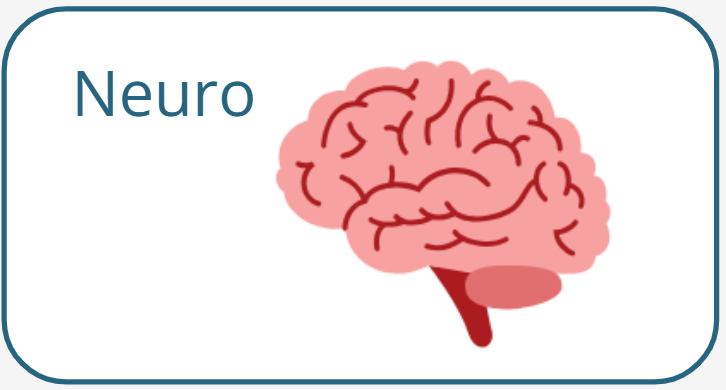
“a nerve or the nervous system”
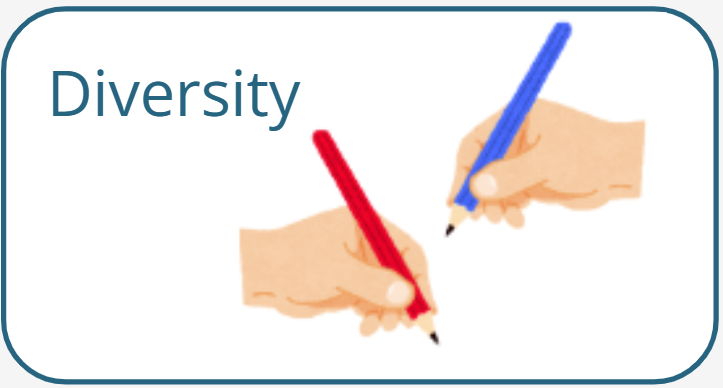
“a variety or assortment”
SOURCE: Definitions from Collins English Dictionary, illustrations my own.
Neurodivergent and Neurotypical
Neurodivergent is the term used when referring to an individual whose brain processes information in a different way to the majority of the population. Neurodivergent conditions include ADHD, autism, AuDHD, dyslexia, dyspraxia, dyscalculia. It is also common to have more than one neurodivergent condition, with 30-50% of individuals with ADHD also have autism.
Current estimates are that 15-20% of the population are neurodivergent. That’s somewhere between 1 in 7 and 1 in 5 of the population. Estimates are best-guesses because many individuals are either not aware or choose not to disclose to others. Consider an average workplace department or team or office environment. If these populations are representative of the population, you will be working with neurodivergent minds. (Unfortunately, neurodivergent minds are often underrepresented in the workplace. Only ~30% of autistic people are in employment(3)). There continues to be a stigma related to having a neurodivergent condition, and reluctance to disclose in the workplace. A stigma largely driven by a lack of awareness and understanding.
Neurotypical is the term used to refer to anyone who’s mind functions in a similar way to most of the population. It is estimated that 80-85% of the population are neurotypical. As a comparison with another natural variation in the human population: 85-90% of the population are right-handed.
Collectively, a mix of neurodivergent and neurotypical minds make up a healthy neurodiverse population.

Neurodiversity as a disability
The legal definition of a disability is when both of these apply:
- there is a ‘physical or mental impairment’
- the impairment ‘has a substantial and long-term adverse effect on their ability to carry out normal day-to-day activities’
And this is where some ambiguity can occur. Some people with neurodivergent conditions may not consider themselves as having a disability. For example, there can be subjectivity as to what a ‘substantial adverse effect’ is.
The Equality Act 2010 includes disability as a protected characteristic. And therefore neurodivergent employees are often legally protected from disability discrimination in the workplace. A formal diagnosis of a condition is not required to be protected. Read guidance for employers on gov.uk and on ACAS.
Neurodivergent conditions
Named neurodivergent conditions, or ‘neurotypes’ indicate shared characteristics. It’s important to remember that each individual will have had and be having different experiences and will be having a unique impact on their lives. Neurotypes can be used as a guide, but not to be used to form any assumptions about an individual or what strengths they have or challenges that may encounter.
Autism
ADHD
Dyslexia
Dysgraphia
AuDHD
Dyscalculia
Dyspraxia
Tourette Syndrome
Intersectionality with neurodiversity
It is important to note that many individuals will have multiple neurodivergent conditions.
For example, a study published in The Lancet suggests that 28% of autistic children also have ADHD; a condition referred to as AuDHD. However, the understanding and research in this area is low, so the prevalence may of having both Autism and ADHD may be considerably highly.
Many individuals will also be impacted in different ways by multiple aspects of their identity and inequalities throughout their lives; such as gender, race, sexuality, age and other protected characteristics within the Equality Act 2010.
Use of labels and language
It may not be ideal to apply ‘labels’ to different communities of people. But with general awareness and understanding of neurodiversity being low, I think that using named conditions can be helpful to better understand some of the challenges that individuals have in their lives. However, it must be remembered that each individual will have different strengths and different challenges. These differences are sometimes referred to as having a spiky profile. In coaching conversations, I take time to understand what the condition means to the you. What strengths do you have that you could use more effectively? What challenges would you like to spend time exploring? If a colleague or member of your team has shared a suspected or formal diagnosis with you, then take the time to ask questions and listen, don’t assume.
Different people hold different preferences to describe their condition. One prominent example being that some people preferring to describe themselves as ‘autistic’, others as a ‘person with autism’. Language continues to evolve. I take the view that while terminology may appear complex and difficult to learn, we should assume good intentions – let’s not use fear of ‘getting it wrong’ as a barrier to not having a discussion. Achieving greater awareness and understanding through conversations is significantly more important to me.
Work with me
I support organisations by providing neurodiversity awareness training, sharing lived-experiences and helping organisations to establish psychological safety in the workplace. I also practical support for line managers and 1-to-1 coaching to neurodivergent employees through workplace coaching.
It is currently estimated that between 1 in 5 and 1 in 7 of the population have a neurodivergent condition. If you have 10 employees, then you will have 1 or 2 neurodivergent employees on average. What are you doing to establish the conditions for all your employees to perform at their best?
Book a call with me or email me at hello@palmatumcoaching.com to discuss how I can help you.
References:
(2) Judy Singer’s thesis is available to read on Kindle: https://www.amazon.co.uk/NeuroDiversity-Birth-Idea-Judy-Singer-ebook/dp/B01HY0QTEE
(3) The Buckland Review, Feb 2024 https://www.gov.uk/government/publications/the-buckland-review-of-autism-employment-report-and-recommendations/the-buckland-review-of-autism-employment-report-and-recommendations